Last time, this column ended with a cliffhanger: the next match would reveal whether the lesson had landed.
The SPARTANS answered five times.
“The wake-up call worked,” one supporter said. “The snooze button has been removed, the alarm has been moved across the room, and someone has hidden the pillows.”
The Team in the Mirror
The worst part of losing to Milpitas and San Bruno was not the seven goals. It was how unfamiliar the SPARTANS looked while conceding them.
The pressing was disconnected or non-existent. The passing lacked conviction. Loose balls belonged to whoever wanted them more, and too often that was the opponent. A team built on collective intensity had begun waiting for the match to come to them.
Coach Oscar did what coaches do after a weekend like that. He went back to the video.
“I watched the matches twice,” he said. “The first time, I did not recognize the team. The second time, I watched through my fingers. Those were not the SPARTANS we had worked to become. Somewhere along the way, we had lost part of our identity. That was my responsibility to correct.”
The diagnosis had several layers. Injuries had reduced the available roster, and managing the healthy players had become a balancing act. Lighter workloads protected tired legs, but they also carried a hidden cost. A team accustomed to playing aggressively can gradually become comfortable playing cautiously.
“We were trying not to overwork the available players while waiting for others to return,” Coach Oscar said. “But if you remove too much intensity, endurance drops and the team becomes passive. With a short roster, we needed to become more capable of running and competing—not less.”
The prescription was simple and unlikely to win a popularity contest: restore the intensity in training.
The SPARTANS did not need a new identity. They needed to recover the habits that had made the old one so difficult to play against.
The Quiz Begins
Santa Clara Rush arrived first, following a week of training in which the previous weekend was discussed at considerable length.
The work showed quickly.
In the 17th minute, Ryder finished a move created by Jackson. Two minutes later, Ben added a second. Two goals in two minutes transformed the match and gave the SPARTANS something they had lacked during the previous weekend: control.
The pressure was coordinated again. One player stepped forward and another closed the escape route. Santa Clara had less time on the ball, fewer comfortable passing options, and almost no opportunity to establish rhythm.
Alex completed the 3–0 victory in the 55th minute after Luis supplied the pass.
That minute—and those two players—would matter again.
More immediately, the performance gave the SPARTANS their first clean sheet of the recovery. The team had responded to embarrassment with work, and the work had produced something recognizable.
Ten Healthy Players and One Captain
The next test came on the road against San Francisco Glens in State Cup play.
Injuries and illness left only ten healthy players available.
Then Parsa made himself available.
The captain was still recovering from illness and clearly was not at full strength. He nevertheless understood the situation: ten players meant entering the match short-handed; eleven meant the SPARTANS could field a complete side.
There would be no bench, but there would be a full team.
Leadership is often discussed as something delivered in a speech. Sometimes it is quieter. Sometimes it is a player with every reasonable excuse to remain home arriving at the field, tying his cleats, and standing beside his teammates.
“I have heard captains give speeches,” one supporter said. “Parsa showing up was the best one I’ve heard all year.”
The SPARTANS won 1–0.
Ben scored, Jackson assisted, and everybody defended the lead as if it were made of glass. With no substitutions available, each player knew nobody else was coming to finish his work.
The match demanded concentration, discipline, and a willingness to remain uncomfortable. Those were precisely the qualities that had disappeared during the black weekend.
Against the Glens, they returned.
Two Matches in Twenty-Four Hours
The previous time the schedule placed two matches in one weekend, the SPARTANS conceded seven goals and a considerable amount of confidence.
When the format returned, so did the opportunity to demonstrate that something had changed.
Madera Roja came first.
The SPARTANS scored in the seventh minute, but the match remained tight for more than an hour. Madera was stronger than the final score would eventually suggest, and it stayed close enough to threaten a comeback.
The difference emerged late.
The SPARTANS continued running. Madera’s resistance began to weaken. Space that had been unavailable earlier in the match started to appear.
In the 71st minute, Ezra carried the ball from end to end and scored his first SPARTANS goal. It was the moment that broke Madera’s resistance. Two more goals followed in the 75th and 77th minutes, turning a demanding contest into a 4–0 victory.
The margin belonged to the final ten minutes. The performance belonged to everything the SPARTANS had done to reach them with more energy than their opponent.
The next morning brought a very different challenge.
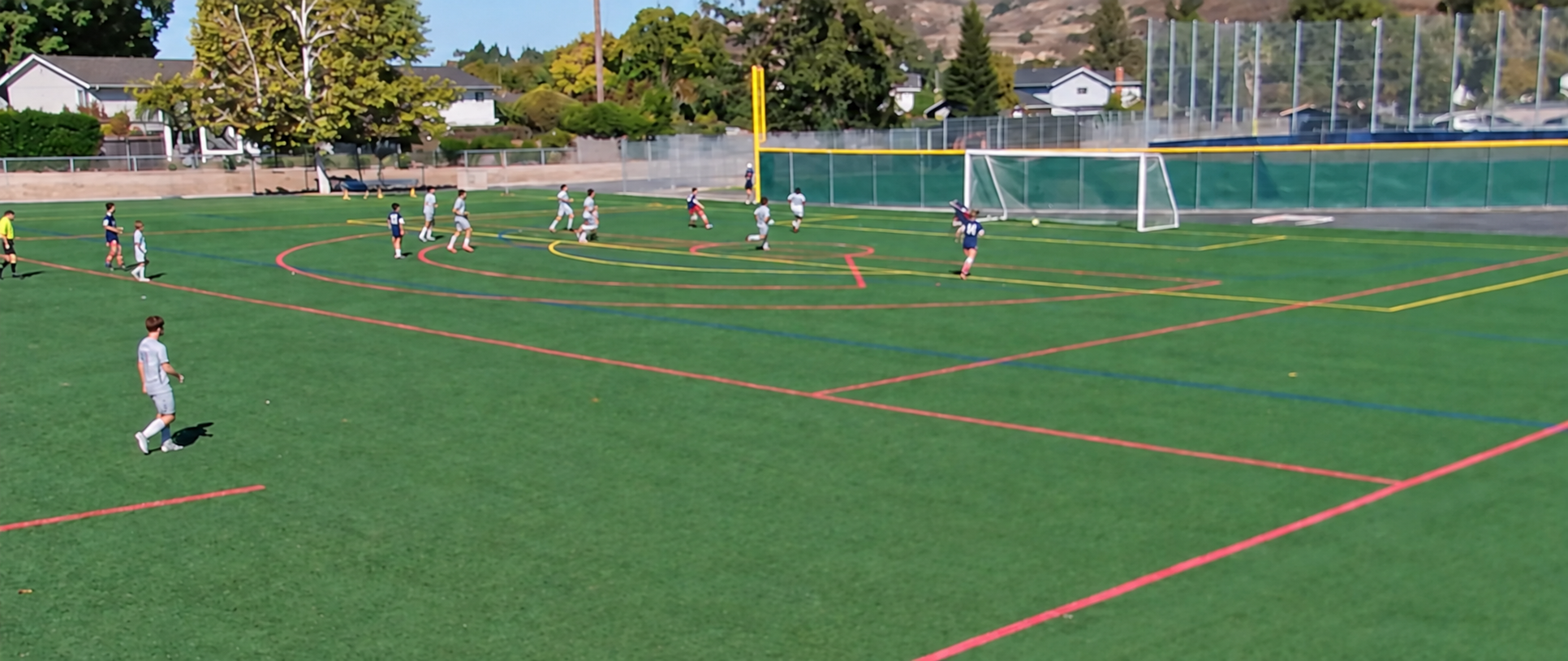
The SPARTANS scored in the opening minute against Santa Cruz Surf and spent nearly the entire match protecting that advantage. Santa Cruz pushed persistently for an equalizer, forcing the SPARTANS to defend with patience rather than panic.
Without abandoning the attack, the team resisted the temptation to chase a second goal at the expense of its shape. Defenders remained connected. Midfielders tracked runners. The SPARTANS accepted that the match would be uncomfortable and stopped expecting comfort to arrive.
The opening goal was enough.
“Scoring in the first minute and protecting it for the rest of the match is very efficient,” one supporter said. “Emotionally irresponsible, perhaps. But efficient.”
The 1–0 victory secured second place in the State Cup group behind San Bruno.
Across four matches, the SPARTANS had demonstrated four kinds of progress: control against Santa Clara, resilience against the Glens, attacking authority against Madera, and defensive patience against Santa Cruz.
A fifth examination was waiting.
It had been undefeated all season.
First Place on the Line
North Valley’s NV/SJ United Storm arrived with a 4–0 record, fourteen goals scored, and only three conceded.
The SPARTANS entered at 3–1, having scored fifteen and allowed four.
First place in the division was on the line.
The SPARTANS had five substitutes available, although illness limited one player to approximately twenty minutes. It was more depth than they had possessed in San Francisco, but the squad was still not fully healthy.
From the opening whistle, the match carried a different weight. Challenges arrived harder. Space vanished quickly. Every second ball became a physical contest, and neither team approached one cautiously.
Storm was organized, dangerous, and prepared to fight for its undefeated record. This time, the SPARTANS matched the intensity.
The match remained scoreless until the 37th minute, when North Valley found the breakthrough shortly before halftime.
This was the moment the previous weeks had been building toward.
During the black weekend, falling behind had produced hesitation. One mistake invited another. Urgency became panic, and structure gave way to individual attempts to rescue the match.
Against Storm, the SPARTANS stayed together.
They returned for the second half and continued pressing, running, and forcing North Valley to defend. Nobody tried to solve the match alone. Nobody treated the deficit as proof that the afternoon was already lost.
The equalizer arrived in the 55th minute—and brought an unexpected symmetry.
Alex flicked the ball into space for Luis, who drove a low finish across the goalkeeper and inside the far post.
It was the same minute and the same two players involved in the final goal against Santa Clara, but with their roles reversed. Against Santa Clara, Luis supplied the pass and Alex scored. Against Storm, Alex supplied the pass and Luis scored.
The two appeared to have agreed on a schedule.
There was another twist. Luis had spent most of his SPARTANS career in defense. Moved to striker during the second half against Storm, he repaid the coach’s confidence within two minutes, scoring the equalizer that changed the match.
At 1–1, the temperature rose.
Storm remained dangerous, but the SPARTANS began to look stronger as the clock ran down. Tired players continued making recovery runs. Challenges were met. What had been a close match, with both teams exchanging attacks, began to tilt toward the SPARTANS as they built sustained momentum in the second half.
Three Minutes from the End
The winner came in the 77th minute, three minutes before the final whistle.
A SPARTANS corner forced the Storm goalkeeper into traffic. His attempted punch did not clear the danger, and Aldo attacked the loose ball, heading it back toward goal.
The ball bounced through a crowd of defenders, changed direction, and found the net.
For a moment, nobody appeared entirely certain how it had gone in.
A few seconds later, nobody cared.
The players rushed toward Aldo. The sideline erupted. A team that had trailed in a match for first place was suddenly ahead.
The remaining minutes required one final defensive stand. When the whistle confirmed the 2–1 victory, the celebration was intense but brief. Players dropped to the turf—some in pain, others simply at the end of what they had left.
Nobody looked like a team that had won easily. They looked like a team that had paid full price.
The fictitious SPARTANS Department of Competitive Wellness later issued a short report.
“Several players were inspected,” the statement read. “All were found to contain an acceptable amount of turf, dirt, and stubbornness. Two were discovered lying on the turf. They said they were fine. They were not consulted further.”
Recognizable Again
The record is impressive, but the more important change was visible between the numbers.
The coordinated press is starting to come together. Players competed for loose balls, recovered for one another, and continued running when fatigue offered an easy excuse to stop. The team began solving difficult moments collectively again.
The 8–0 victory over Los Gatos demonstrated what the SPARTANS could do when everything flowed. The black weekend exposed what happened when intensity, discipline, and execution disappeared.
The response revealed something more valuable: the SPARTANS could win while short-handed, while protecting a one-goal advantage, and while trailing an undefeated opponent in a match for first place.
They no longer needed the match to be easy before they could play like themselves.
The Hardest Part Comes Next
The SPARTANS are back at the top of the division standings, and the view from there is less comfortable than it sounds.
“Getting back to the top required a response,” Coach Oscar said. “Staying there will require consistency. We cannot treat this as the end of the lesson. This is where the real test begins.”
Next is third-place Sunnyvale Alliance on October 17. Palo Alto and Santa Cruz follow, and neither match offers the SPARTANS permission to relax.
Santa Cruz remains particularly dangerous. It is still searching for its first victory over the SPARTANS after four previous defeats, and the last two meetings were decided by a single goal.
Every opponent now has something clear to chase. The SPARTANS are no longer the team attempting to repair its season. They are the team everyone else wants to remove from first place.
The black weekend forced the SPARTANS to look at themselves honestly. Their answer restored their identity and gave them a lead worth defending.
Reaching the top proved the SPARTANS could respond. Staying there will prove they have truly changed.
Never Retreat! Never Surrender!